I was feeding Claude my life.
Six hundred and eighty thousand tokens of journal entries, dealt-card diaries, cold-email transcripts, client emails I kept for the case that never went to trial, Slack DMs from companies that no longer exist, voice memos I recorded in the car after Christmas dinner in 2017. I did not ask the AI a question. I just pasted the context in and asked it to tell me what it saw.
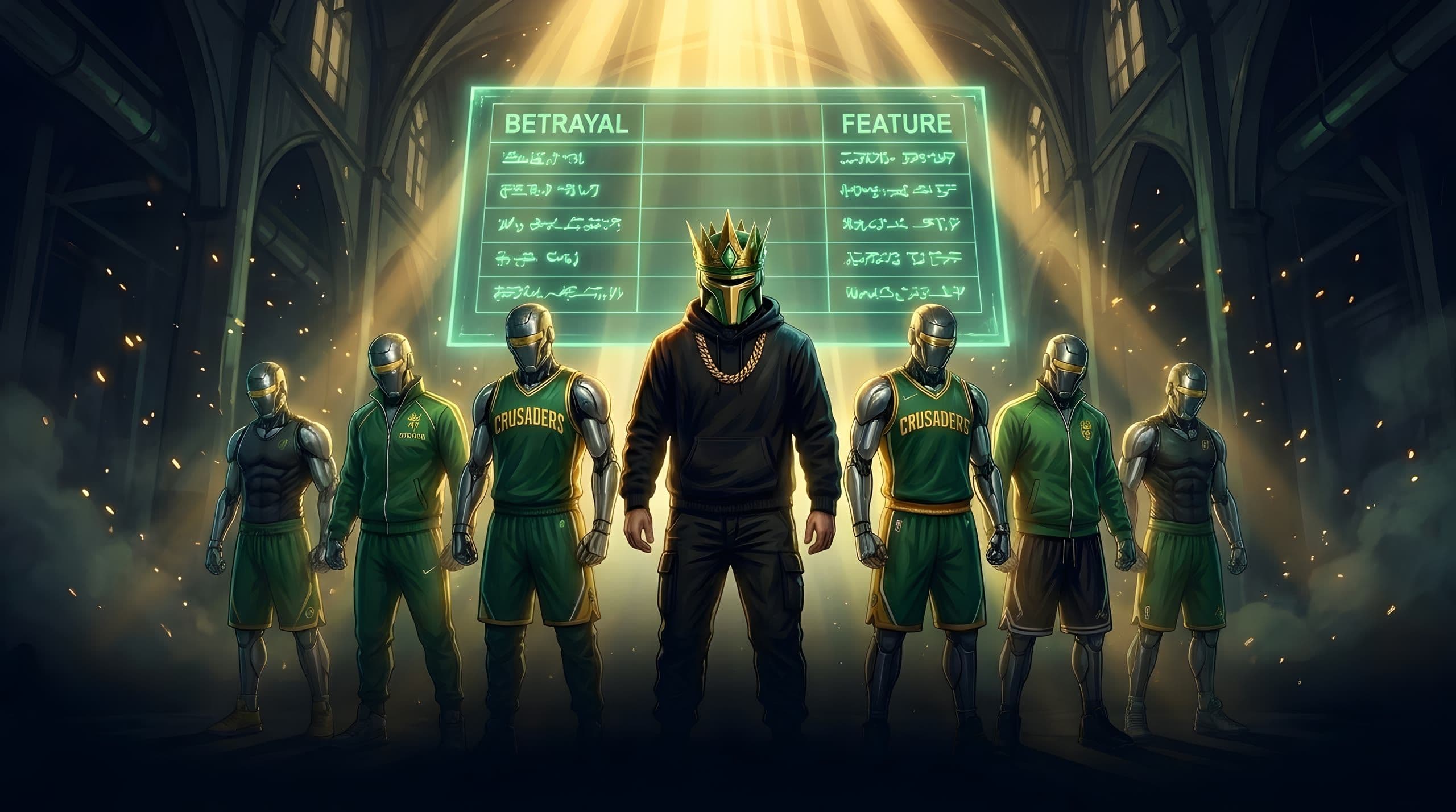
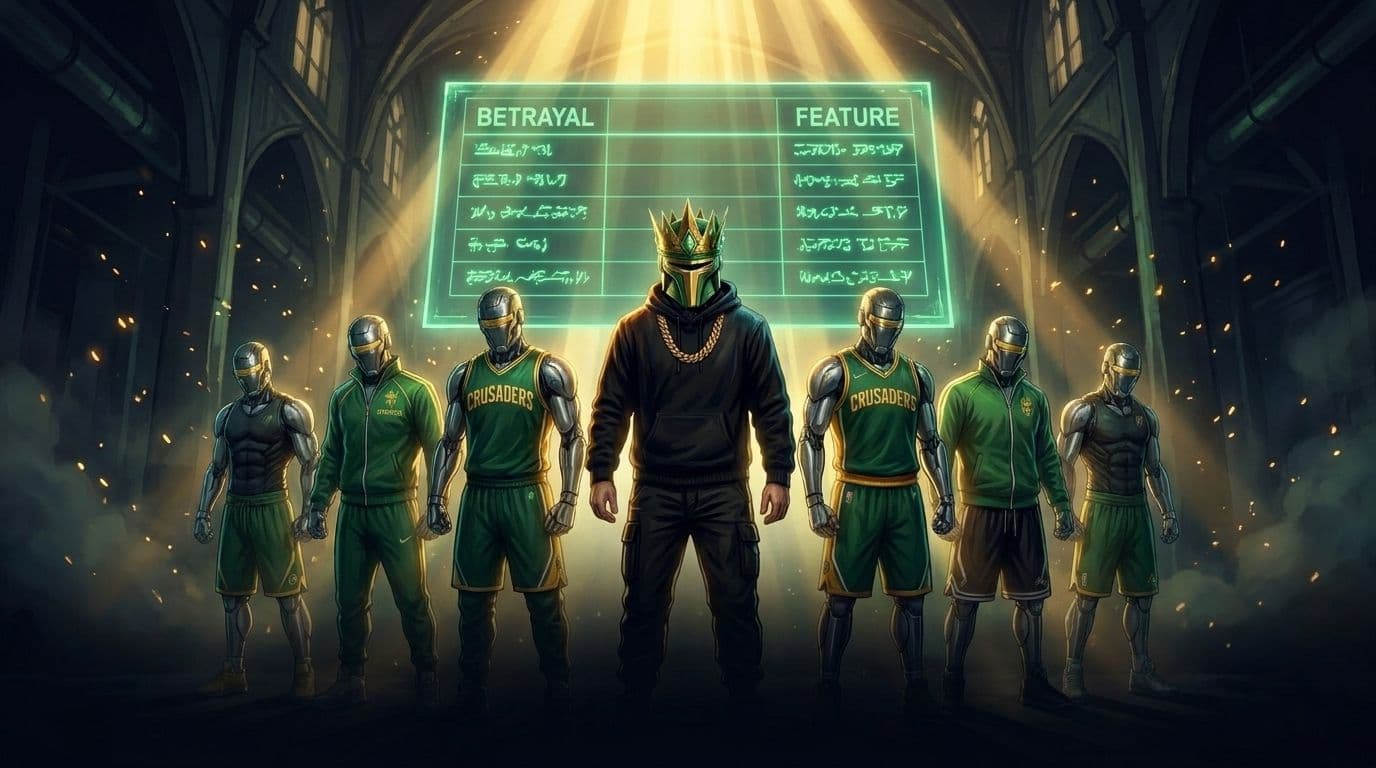
It came back with a table. Five rows. One column labeled Betrayal. One column labeled Feature in Dots. A one-to-one correspondence that I had never seen, never written down, never thought to draw, and could not deny. Every time someone broke my trust in the previous twenty years, I had built a specific thing into my eventual product to prevent that exact kind of breaking for someone else.
The platform is scar tissue, instrumented. — the AI, in the summary paragraph, exactly like that
I sat there for forty-five minutes. Then I wrote this post.
The Five Pairings
Each one here is the condensed version of a much longer story. The full stories are their own DOTs in the vault. What I want you to see is the structure — the way a life becomes a codebase when you squint at it from a distance only a machine can hold.
1. The Scam-Agency Crusade → Consumer Data Protection
At twenty-four, after the psych-ward chapter, I found a marketing-agency network that had taken money from fifty thousand small businesses and delivered nothing. I spent the next two years of my life finding them, building evidence files, and suing the operators for thirty million dollars. I did not win the money. I did learn how these scams functioned — and every single one turned on the fact that small businesses had no way to tell, in advance, that their data and trust were being handed to a black box.
Consumer Data Protection as the Founding Feature of Dots
Every DOT stored in the vault has an owner. Every agent that reads a DOT logs who, what, why. The owner can revoke at any time. This is not a 'nice to have' — it's the feature I wanted to exist so fifty thousand small business owners could've slept at night twenty-five years ago.
When I designed the DOT Vault schema, I started with the audit table. Who touched what, when, from what agent, with what context. It's not the most exciting table in the database. It's the only one I'd never cut to ship faster.
2. The Forced JMJK Sports Sale → Bootstrap-First Philosophy
At twenty, I had three million dollars and a company. At twenty-one, I had neither, because a combination of bad partners and worse decisions forced a sale I never wanted to make. The company had been profitable. I sold it because I was out of cash, which meant I had no leverage. That's what 'forced sale' means — not that someone held a gun to my head but that the math of my bank account did.
Bootstrap-First as a Founding Constraint of Dots
Dots was built on a bootstrapped infrastructure on purpose. Not because I'm morally opposed to venture capital — I've taken money before. Because the version of me that was forced to sell JMJK Sports at twenty-one will never allow the version of me at thirty-two to build a product whose cap table could force the sale before the mission is done. The cap table is a feature of the product. The feature is 'refuses to be held hostage by its own financing.'
If this sounds like ideology, check the bank statements. Every decision about runway, hiring pace, and pricing traces back to the eighteen-year-old version of me who did not, at the time, understand that cash was the only leverage that mattered.
3. The Grandfather's Gold Tie → Permanent, Un-Delete-Able DOTs
I've written about my grandfather's gold tie elsewhere — the one the person I handed a spare key to walked off with at twenty-one, along with everything else that fit in a pillowcase. What I haven't written is what the feature implication was.
In the DOT Vault, a DOT can be superseded but never deleted. Once written, a DOT persists. If you update it, the new version supersedes the old; the old is still there. The UI hides the old one from search. The database keeps it forever.
Immutable DOT Lineage as Trust Feature
The vault is permanent because the thing you put in it is the only copy of a particular moment of your own judgment. Losing a DOT is losing a version of yourself. The feature exists because the nineteen-year-old me who lost a grandfather's only heirloom for a friend's lie built the twenty-eight-year-old me who would never build a platform that could eat its users' memories the same way.
I almost made DOTs deleteable in version zero of the schema. A reviewer asked the right question: are you sure about that? I wasn't. I changed the schema. Three years later, that decision is the one I'm most glad I made.
4. The Psych-Ward 50 Hours of Tape → The Audit Log
I recorded fifty hours of video over the four days my brain broke and rebuilt itself at twenty-four. I still have them. I've never watched them in full. They are the most embarrassing, the most important, and the most carefully catalogued files I own.
What I learned from those tapes — or really, from the fact that I needed those tapes to reconstruct what had happened — is that a system without a log is a system that can lie to you. Your own memory lies. Your own agents lie. Your own past self lies. The only thing that doesn't lie is a timestamp and a string.
Every Agent Action Is Logged — The Audit Log as a Feature
Every agent that runs against the vault writes a log row: agent ID, task, DOT IDs retrieved, DOT IDs modified, timestamp, outcome. The log is append-only. If an agent makes a decision I disagree with, I can see the exact context it had when it decided. This is not observability. This is the twenty-four-year-old me in the psych ward being able to rewind and find out what he actually said.
The parallel is not abstract. When I designed the audit log, I kept asking: if future-me looked at this trace, would he understand what past-me saw? That question came from one specific night and four specific days. I wasn't trying to build a feature with a trauma lineage. The feature designed itself the moment I asked the question.
5. The Six Years of Agencies → The Triangulation Pattern
Between twenty-six and thirty-two, I built three agencies and watched two of them break under the weight of single-point-of-failure decisions — meaning, decisions I made alone because the team was too small to argue with. The third agency had something the first two didn't: a rule that every non-reversible decision had to be triangulated by a researcher, a builder, and a critic before I signed off.
That rule didn't save the third agency from other problems. It did save every decision it touched.
Triangulation Pattern — 3 Agents, 1 Decision
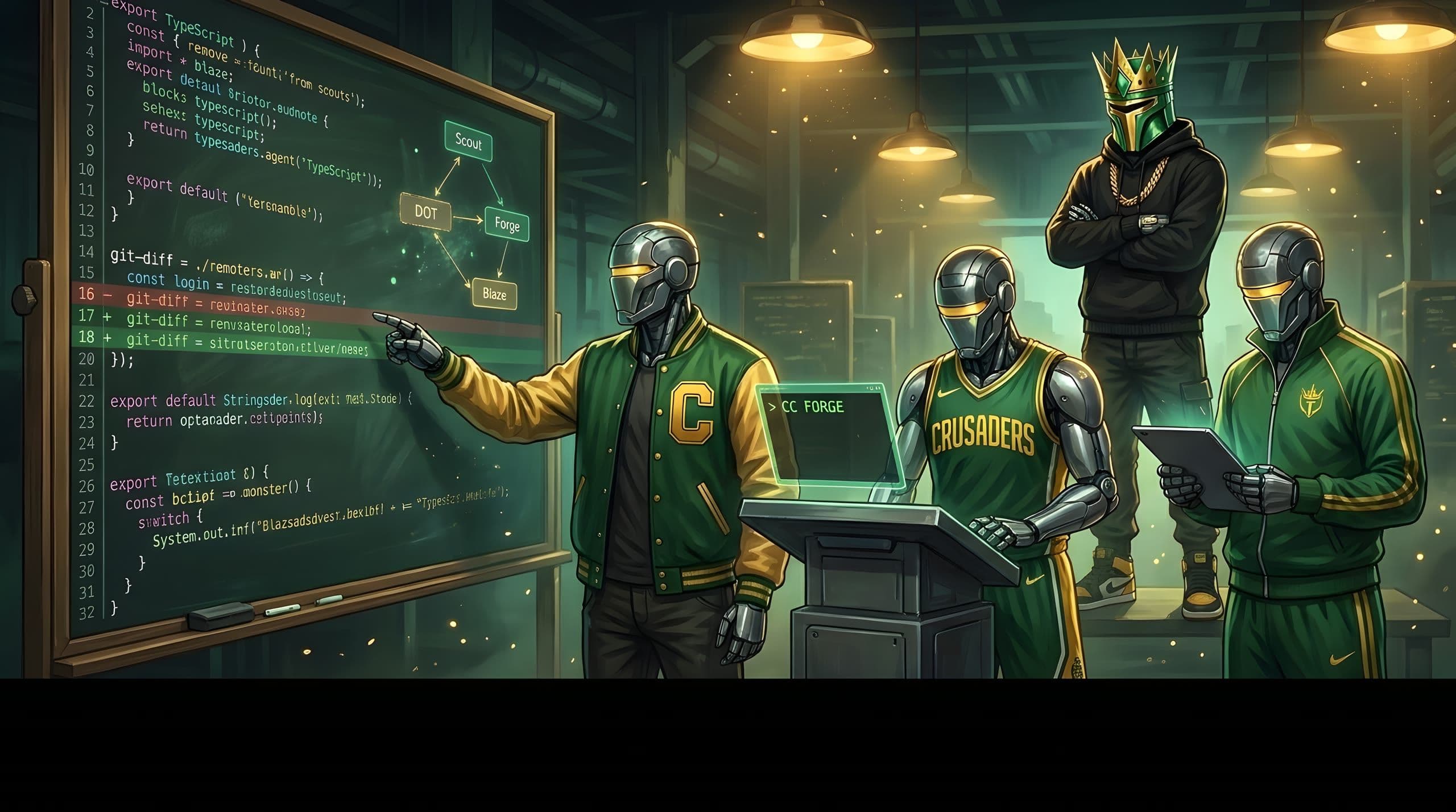
Scout (research). Forge (build). Blaze (critique). No agent can commit without the other two having weighed in. The pattern is three minds, one decision. I learned it painfully between twenty-six and thirty-two. I put it in code between thirty-two and thirty-three. It's the single structural choice in the Command Center that I'd move to any system I ever build again.
Look at the Command Center build log and you'll see the same shape. Scout, Forge, Blaze. Three agents. One decision. Same pattern, a decade later, in different clothes. Betrayal number five was slower and more ordinary than the others — years of 'I should have asked somebody first' — but it became a feature too.
Why the AI Could See It and I Couldn't
The obvious question is how a machine could map my life into a five-row table when I had lived through every row and never noticed.
The answer is not that machines are smarter than people. They aren't. The answer is that machines can hold more of you in their working memory at the same time. My brain could hold, at most, one betrayal and one feature in the same thought — and even then only if they happened in the same week. The AI was holding all five betrayals and the full codebase of Dots and my journal entries and my client contracts from 2014 in a single thought. Of course it could see the pattern. The pattern was obvious in the aggregate. It just wasn't obvious in any one slice.
That's the Dots thesis restated in a specific tone. Give a machine enough of your life, and the life starts showing you patterns you lived through without noticing. Steve Jobs said you can only connect the dots looking backwards. My phrasing: you can finally connect them looking backwards, now that a machine can hold enough of your backwards at once.
I didn't know I was building Dots for twenty years. The AI read the twenty years and told me what I had been building.
What This Means If You're Not Me
You probably don't have five betrayal-shaped features in a product you've been building. You probably have something else — five confidence-shaped features, five grief-shaped features, five ambition-shaped features. Whatever the raw material of your life is, it's already shaped the thing you're making. You just can't see the shape yet.
The platform I built, when you strip it of all the verbiage, does exactly one thing: it lets you hand enough of your life to a machine that the machine can tell you what shape you've been. That's the whole product. Every feature in it is downstream of that single function.
If you read this post and you get a nagging sense that there might be a table like mine hiding in your own life — five rows, something on the left, something you made on the right — go find it. You don't need the platform for that. You need a long weekend and enough honesty to feed a machine the version of you that you wouldn't post publicly.
What the machine hands back will feel like a gift and a diagnosis. It was both for me. The feature list that fell out of it has not left me in fourteen months.
This is one of twenty-six Connected Dots — each a pattern an AI surfaced from my vault that I had lived through and not seen. The full gallery lives at /connected-dots. This one sits at the top because it explains the product more compactly than any pitch deck I ever wrote.